

 LIFEMED
 ESTETİK KLİNİĞİ
 DİŞ KLİNİĞİ
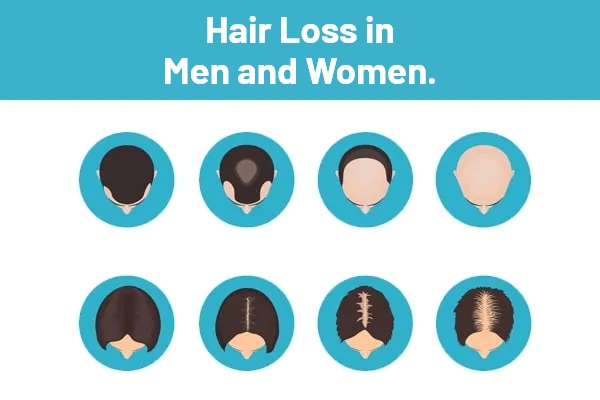
[vc_row el_class=”mobreverse”][vc_column width=”1/4″][vc_wp_custommenu nav_menu=”4″][gravityform id=”6″ title=”false” description=”false” ajax=”false”][/vc_column][vc_column width=”3/4″ el_class=”polileftspace lfcontent”][vc_single_image image=”625″ img_size=”full” css=””][vc_custom_heading text=”What is Hair Transplantation?” font_container=”tag:h3|text_align:left” use_theme_fonts=”yes” css=”” el_class=”secheading”][vc_column_text css=””]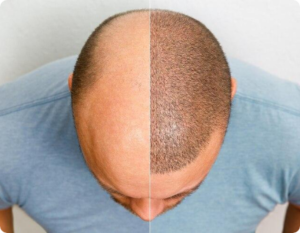 Hair transplantation is a procedure aimed at achieving natural and healthy hair for individuals who have experienced or are experiencing hair loss due to various reasons (genetics, age, accidents, illness, etc.). In hair transplantation, the patient’s healthy hair is added to the bald, sparse, thinning, or hairless areas. The areas where healthy hair is located are called donor areas, and the hair roots are referred to as grafts. In this procedure, hair follicles are taken from donor areas and transferred to the hairless areas. The process typically takes 4 to 8 hours. Patients can be discharged on the same day and return to their daily activities the next day. The goal is to achieve natural and permanent hair growth for both male and female patients. This widely preferred procedure is performed using three different techniques: FUE, DHI, and FUT.
In addition to genetically caused hair loss, hair loss can also occur due to stress, accidents, and environmental factors. Depending on the patient’s condition, it can be treated with medication, vitamins, minerals, and/or a hair transplant procedure. According to studies, hair loss in an adult individual can begin at the age of 18 and continue until the age of 57. For individuals who experience permanent hair loss and are dissatisfied with it, hair transplant surgery is recommended as it offers a lifelong, permanent solution compared to hair prosthetics and hair pigmentation (hair tattoo).[/vc_column_text][WpLookingHCta fa_mbtn_name=”444 54 33″ fa_mbtn_link=”url:tel%3A%204445433″ fa_rbtn_name=”Get Information” fa_rbtn_link=”url:https%3A%2F%2Flifemedhair.com%2Fen%2Fcontact-us%2F|title:%C4%B0leti%C5%9Fim”]To get more information about hair transplantation, you can contact our call center or fill out the free information form.[/WpLookingHCta][vc_row_inner el_class=”contentwhite”][vc_column_inner][vc_column_text css=””]
What is FUE Hair Transplantation?
FUE (Follicular Unit Extraction) Technique is the preferred method for hair transplantation in today’s technology.
When discussing the benefits of the FUE technique:
- It is a procedure performed only on the hair follicles without any tissue removal from the area where the grafts are located.
- No stitches or incision marks are left during or after the procedure. The transplantation is performed using micromotors and micropunches.
- Before the procedure, sedated local anesthesia is applied to ensure comfort during the operation.
- In a single session, it is possible to harvest an average of 3,000 to 5,000 grafts.
- It is a technique that can also be used for beard, eyebrow, and mustache transplantation.
- It can be applied to both women and men.
- The completion time for the procedure is 4 to 8 hours.
- Patients can return to their daily lives immediately after the operation.
- It is a procedure that does not require any special products, except for the shampoo and care recommended by the doctor during the recovery process.
[/vc_column_text][/vc_column_inner][/vc_row_inner][vc_row_inner el_class=”contentorange”][vc_column_inner][vc_column_text css=””]
What are the techniques used in our clinic for hair transplantation?
In our clinic, Sapphire FUE and DHI (Choi Implanter) hair transplantation techniques are applied. Currently, the most preferred and effective method in hair transplant surgeries is FUE, or Follicular Unit Extraction. In this method, hair follicles (grafts) from the donor (healthy hair) area are taken one by one and implanted into the recipient area, unlike the FUT method, where hair follicles are taken in blocks. Millimeter-sized tools are used during these procedures. In the FUT technique (Follicular Unit Transplantation), hair follicles are taken from a strip of hair from the nape area and separated into individual roots. These roots are then transferred to the area where the transplant will be performed. The FUT technique, a classical method, may leave a scar and cause loss of sensation in the donor area, which is why it is not the preferred procedure in our clinic.[/vc_column_text][/vc_column_inner][/vc_row_inner][vc_row_inner][vc_column_inner][vc_video link=”https://www.youtube.com/watch?v=CE0LjsAxHAk” css=””][/vc_column_inner][/vc_row_inner][vc_row_inner el_class=”contentblue”][vc_column_inner][vc_column_text css=””]
How is hair transplantation performed?
The process of starting the procedure:
- In this step, some tests are performed on the patient to avoid compromising their general health. Blood samples are taken, and values such as Hemogram, Anti HIV, Anti HCV, HBsAg, APTT, Prothrombin time, etc. are analyzed. If no condition is found that would prevent hair transplantation, the operation process proceeds.
- The patient is taken to the operation room and wears sterile operation clothes for the hair transplant. They lie face down on the stretcher.
- Since a sedative method is used, the scalp is first disinfected for local anesthesia. An anesthetic drug is applied to the donor area where the grafts will be collected using an injection needle. Afterward, the procedure begins.
- Using a micromotor/manual punch, the hair follicles (grafts) are collected one by one and placed in glass containers.
- The collected grafts are examined one by one in preparation for transplantation. They are properly prepared for the correct grafts to be harvested. Since the grafts contain fat and tissue pieces, the sorting and cleaning process is also very important.
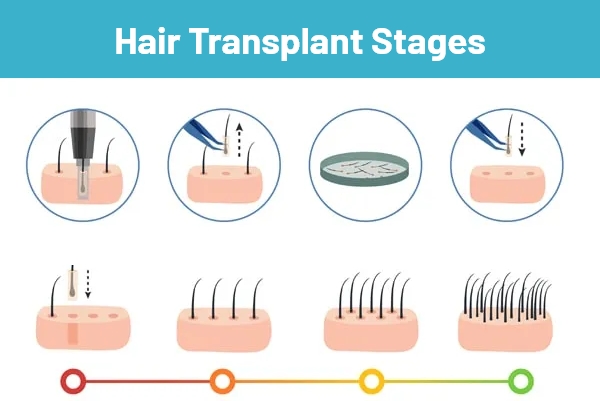
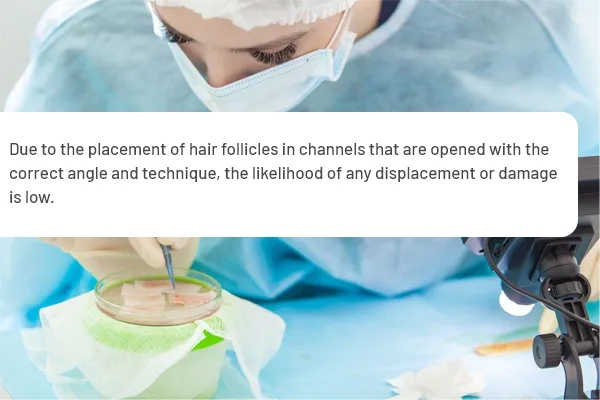
- Channels are opened in the transplant area to place the harvested grafts. For a natural appearance, it is essential to pay attention to important factors such as the width, angle, and direction of the channel being opened during the process. If the channels are not opened in a manner suitable for the scalp, an artificial and aesthetically poor appearance will result.
- The hair follicles are placed into the opened channels, and the operation is completed.
[/vc_column_text][/vc_column_inner][/vc_row_inner][vc_row_inner equal_height=”yes” css=”.vc_custom_1735731894819{margin-top: 30px !important;margin-bottom: 30px !important;}” el_class=”ikilikutu”][vc_column_inner width=”1/2″][WpLookingContentColor bgrenk=”#F3F6F5″]
What is the duration of the procedure?
The average duration of the procedure varies between 4 to 8 hours, depending on the number of grafts to be transplanted (the tissue prepared for hair transplantation to the bald area). On average, 3000-5000 grafts are obtained during the procedure.[/WpLookingContentColor][/vc_column_inner][vc_column_inner width=”1/2″][WpLookingContentColor bgrenk=”#FEF4E6″]
What is required for a healthy hair transplant?
For the transplant procedure to be performed, the patient should not have any chronic health issues that may pose a risk, no problems related to blood clotting, and there should be an adequate amount of hair in the donor area located between the two ears for transfer.[/WpLookingContentColor][/vc_column_inner][/vc_row_inner][vc_row_inner equal_height=”yes” css=”.vc_custom_1735731897859{margin-top: 30px !important;margin-bottom: 30px !important;}” el_class=”ikilikutu”][vc_column_inner width=”1/2″][WpLookingContentColor bgrenk=”#FFFFFF” borderrenk=”#EEEEEE”]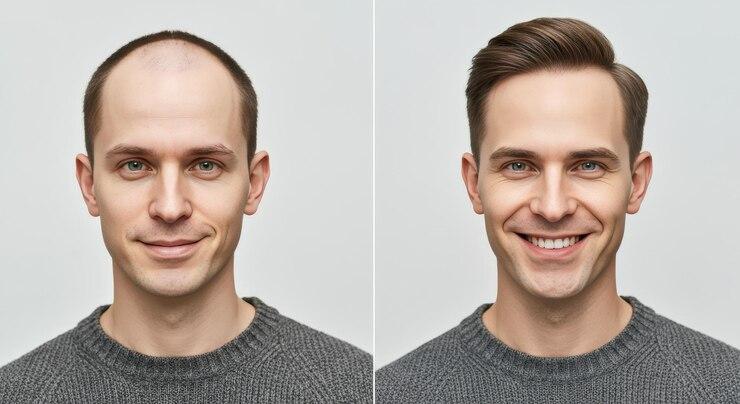 [/WpLookingContentColor][/vc_column_inner][vc_column_inner width=”1/2″][WpLookingContentColor bgrenk=”#FFFFFF” borderrenk=”#EEEEEE”]
 [/WpLookingContentColor][/vc_column_inner][/vc_row_inner][vc_row_inner equal_height=”yes” css=”.vc_custom_1735731897859{margin-top: 30px !important;margin-bottom: 30px !important;}” el_class=”ikilikutu”][vc_column_inner width=”1/2″][WpLookingContentColor bgrenk=”#FEF4E6″]
Can hair transplantation be performed on everyone?
Hair transplantation can be performed for both women and men. For female patients, it is essential to first determine the degree of hair loss. Hair transplantation can be applied if the hair loss is at least 50% or more, as seen in male-pattern baldness. The procedure and the required number of grafts are determined based on a medical evaluation, taking the patient’s preferences into consideration.[/WpLookingContentColor][/vc_column_inner][vc_column_inner width=”1/2″][WpLookingContentColor bgrenk=”#F3F6F5″]
What is the success rate of hair transplantation?
The success rate depends on the technique used and whether the donor area has healthy and sufficient hair follicles. Patients should also follow the post-operation procedures and take care of their overall health during the recovery process. The recovery and hair growth become noticeable within two weeks. The final result is successfully achieved between 95% and 98% by the end of one year.[/WpLookingContentColor][/vc_column_inner][/vc_row_inner][WpLookingHCta fa_mbtn_name=”444 54 33″ fa_mbtn_link=”url:tel%3A%204445433″ fa_rbtn_name=”Get Information” fa_rbtn_link=”url:https%3A%2F%2Flifemedhair.com%2Fen%2Fcontact-us%2F|title:%C4%B0leti%C5%9Fim”]To get more information about hair transplantation, you can contact our call center or fill out the free information form.[/WpLookingHCta][/vc_column][/vc_row]

